Showing posts with label Sandhills. Show all posts

Thursday, September 3, 2020

Marcus and Emma Eaton, Homesteaders

February 2006
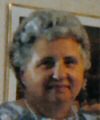
Marcus and Emma (Hart) Eaton

About 1899, my great grandparents, Marcus and Emma (Hart) Eaton, came from Marshalltown, Iowa, with their daughters Cora and Violet (my maternal grandmother), and homesteaded in the Lavaca area of Cherry County, Nebraska. 

With a population of 20 (according to the Nebraska State Gazetteer, Business Directory and Farmers List for 1890-1891,) Lavaca was the Sandhill version of a post-hamlet.  It had 2 blacksmiths and a general merchandise store that probably doubled as a post office, as well as a school and probably a church or two. It was located about 25 miles southwest of Merriman on the extreme western edge of Cherry County.  The Lavaca Flats lie alongside the Niobrara River. It's an area of level land with good meadows, and nowadays, some center-pivot irrigated farmland. 

According to the 1886 map of the Fremont, Elkhorn & Missouri Valley Railroad. a rail line ran through Valentine and Gordon and on to Douglas, Wyoming. The Homestead Office was in Valentine. Marcus and Emma probably rode the train as far as Merriman, but I have read about people who got off the train at Valentine and walked many miles through the sandhills to their homesteads.

During their years at Lavaca, Marcus and Emma added two more daughters to their family, Almira and Letha. Marcus drove the twice-weekly stage to Gordon, and was a road overseer for the Lavaca precinct, as well as farming his homestead.

As the girls grew up, Marcus and Emma wanted them to have a high school education. They sold their homestead in about 1912 and moved to Gordon.* There, the three younger girls completed high school, and Marcus operated a livery stable. Marcus was a farm boy, and he had worked as a teamster in Marshalltown before they came to Lavaca. He knew a lot about horses.

Emma died in 1929, and in 1931, Marcus lost his daughter, Violet (Eaton) Sees to influenza. Marcus visited his widowed son-in-law Harry Sees and his granddaughter, Doris (my mother) frequently after Violet's death.  Doris described Grandpa Eaton as a tidy, well-groomed fellow. Both she and her cousin Maxine Young (daughter of Letha Eaton Young) had fond memories an all-day trip with Grandpa Eaton in his car to visit Wounded Knee, just across the South Dakota line from Sheridan County, Nebraska. 
  
Marcus and Emma are buried in the Gordon, Nebraska city cemetery, adjacent to the graves of Violet Eaton Sees, Harry Sees, and Harry's second wife, Barbara Weber Sees. The Eaton graves were unmarked for many decades, but in 2014, my brother, Dwight Hill (a great-grandson,) had a tombstone installed.

When I was a little girl, my mother pointed out a certain frame building in Gordon as her Grandpa Eaton's livery stable. The building had big doors -- beyond that, I don't remember much about it. When I was in Gordon with Keely and Isaac in 2000, I tried to relocate it, but I learned that it had been torn down.  

One other thing of interest about my great-grandfather Marcus Eaton -- he remembered that as a little boy in Marshall County, Iowa, he played in the buffalo wallows on the prairie.

* In about 1917-1920, Violet Eaton returned to Lavaca as a schoolteacher. While Violet was teaching there and boarding with a school family, she had the memorable experience of discovering a mouse inside her nightgown after she had put it on and gone to bed. (Good family stories should be recorded and retold.) In 1940-42, my mother (Doris Sees Hill) taught in the same Lavaca school. As part of her contract, she was given a horse to ride to school. Some in the community remembered both her mother (Violet) and her grandparents (Marcus and Emma.)

Emma (Hart) Eaton was born in Polk County, Iowa, 06 Feb 1865, and died 19 Apr 1929 in Gordon, Sheridan County, Nebraska. Marcus Eaton was born in Marshall County, Iowa, 13 Sep 1861, and died 03 Jul 1942 in Gordon, Sheridan County, Nebraska. Marcus and Emma were married on 19 Nov 1889, in Mitchell, Davison County, South Dakota.

Monday, August 31, 2020

Memories of a Moon Lake Childhood

January 2006

Aunt Cleona mentioned a coconut peanut brittle in her 2005 Christmas card, and I asked her to send me her recipe. When she sent it, she included several other favorite holiday recipes and a long letter too. Here is an excerpt (and my comments in brackets.)

One thing I remember your Dad talking about is how Freddie Wales came one time and how he [your Dad] liked his [Freddie's] cowboy boots. He asked Mom and Dad for a pair, but guess they didn't approve. Anyway, he said he saved up his money and got him a pair as soon as he could. Never wore anything else after that. Also remember your dad having a pair of black leather chaps.

One time I remember I guess he went to get on his horse or off. Anyway somehow he got his foot caught in the stirrup and the horse was dragging him and someone managed to grab the reins as the horse went to go out the gate or your Dad probably would have been drug to death.

Then he asked me one time when he was here if I remembered Mom frying our pet rabbit for supper and none of us kids would eat any of it. I can't stand rabbit to this day. [This was during the Depression. Cleona continues with a memory of another unhappy childhood event.]

I remember one other time I had an accordion type valentine and I'd got it from my teacher. I'd left it in the window standing up. I came home from school and asked Mom where it was and she'd burnt it.

All them good old days riding horseback to school facing that old northwest wind and so cold you could hear the screech of horse hooves on the snow. Them are some of my memories. Don't regret any, just the way it was.

We were fortunate to have the artesian wells and a tank with a house over it to keep our cream and milk, etc., cold. It would make your arm ache to reach down in that water. It was that cold. We could put a gallon syrup pail of milk in there when we first started to milk and it would be cold by the time supper was ready. Them syrup pails also was our dinner buckets when we went to school.

I remember Dad putting a fence on top of a fence because snow drifted clear over the fence and sheep were walking out of the pen on the drifts. Then it was my job to stay on a horse all day in summer time herding them sheep. One evening I was bringing them in and a coyote came out of the swamp and grabbed a lamb. I got it run off but that lamb always had a big knot on his neck but it lived.

It was also Charlie's [my dad's] job when I was little to keep me in the yard. Of course I'd find a hole and crawl out.

One time I remember all three of us getting spanked. Guess we'd had some spring rain and we all played in the water.

Also remember Charlie getting on his ice skates when the lake [Moon Lake, south of Johnstown, Nebraska] was frozen in the wintertime. We'd probably be going to Grandpa Clark's and Dad would drive on around the end of the fence out onto the lake. I was always afraid the ice would break through. You'd hear it crack. Then we'd pick up Charlie down on the other end of the lake. He'd skate that far.

In summertime, turtles would come out and lay their eggs in the sand along the lake. Then when they hatched, they'd go back to the water.

There was springs in that swamp. We used to fill our water jugs when we were going to the hayfield. In the wintertime, the spring water going out into the lake, when it was so cold, there would be like a fog above the water.

There was flowers that looked like your tiger lilies. In the spring of the year, the carp would come up the creek and you could catch them with your hands. Lots of times we'd see an old mother duck with her little ones swimming in all that water.

It was also Charlie's [my dad's] job when I was little to keep me in the yard. Of course I'd find a hole and crawl out.

One time I remember all three of us getting spanked. Guess we'd had some spring rain and we all played in the water.

Also remember Charlie getting on his ice skates when the lake [Moon Lake, south of Johnstown, Nebraska] was frozen in the wintertime. We'd probably be going to Grandpa Clark's and Dad would drive on around the end of the fence out onto the lake. I was always afraid the ice would break through. You'd hear it crack. Then we'd pick up Charlie down on the other end of the lake. He'd skate that far.

In summertime, turtles would come out and lay their eggs in the sand along the lake. Then when they hatched, they'd go back to the water.

There was springs in that swamp. We used to fill our water jugs when we were going to the hayfield. In the wintertime, the spring water going out into the lake, when it was so cold, there would be like a fog above the water.

There was flowers that looked like your tiger lilies. In the spring of the year, the carp would come up the creek and you could catch them with your hands. Lots of times we'd see an old mother duck with her little ones swimming in all that water.


Cleona also wrote in her letter that her son Lonnie's favorite pie is coconut. Coconut pie was my dad's favorite cream pie, too. On a bread recipe, she noted that it made a good dough to fry and powder up with sugar. This reminded me that my mom sometimes fried bread dough, as a fast way to have hot bread for dinner even though the dough wasn't ready to bake. We all loved it.

Cleona's comments about baking made me think that Grandma Nora (mother of my dad, Uncle Harold, and Aunt Cleona) was probably a baker of coconut pies and a fryer of bread dough, too.

Cleona Mae (Hill) Allen was born on 12 May 1929 in Wood Lake Township, Cherry County, Nebraska and passed away on 10 Jul 2009 at Independence, Montgomery County, Kansas.

In the comments to this post, David Netz, a cousin, asked if Dennis remembered eating rabbit as a child. Dennis answered that he remembered it being on the table, but that he had not eaten any of it if he could help it!

Sunday, August 30, 2020

My Emerson Upright Piano

January 2006

Yesterday, on the 11th day of Christmas, I received one last Christmas gift, something I had specifically asked for. A piano tuner came to our house and tuned my piano. 

He also fixed two small things that were wrong with it -- a key on the far right that didn't make a sound and also the C key, an octave above Middle C, that didn't hold its sound. The damper on the C was broken, so he removed the damper from the highest of notes that have dampers and moved it down to that C. He will try to order a replacement damper from his catalogs of old piano parts. 

 Isaac felt vindicated and outraged when I told him the piano tuner had found the missing ivory key-cover inside the piano. For years, I thought that the kids had lost that piece of ivory, and Isaac remembers that I expressed my suspicion quite a few times.

As all piano tuners do when they work on this piano, he commented that it was in very good condition and had a nice sound for the age of the instrument. It's probably over 100 years old. The most recent patent date inside the piano is 1893. 

My mother bought this piano from a newspaper ad when it became apparent that I was practicing my piano lessons willingly and learning to read music. We had another piano before this one. My mother had tried to refinish it, and it hadn't gone well. When she moved in the new piano, my dad took the old piano to the blowout* and dumped it. I remember it lying on its back with its face to the sky. 

Over the years, this piano went from Nebraska to Missouri to Kansas with my mother and father, and after they passed away, I moved it to Kentucky. The kids and I had a memorable trip! We drove an excessively large U-Haul truck that was nearly empty except for the piano, dragging our car behind for 750 miles.We made the trip without serious incident, and the day that the piano took up residence in my living room, I know that my mother smiled. She bought the piano for me, and at last it was in my home. She would be glad that I got it tuned again at last, and she'd be pleased at how nice it sounds. *

In the Nebraska Sandhills, a region of grassed-over sand dunes, where I grew up, a blowout is a sandy depression or hole caused by wind erosion. Rightly or wrongly, Sandhill ranchers discarded their trash in blowouts. Trash in a blowout was a ranch history of sorts, with an odd assortment of well-weathered objects such as old cast iron cook-stoves, tangles of antique barbed wire, old bottles and cans, and skeletons of dead cattle. And a piano, in this case.